Showing posts with label autochess. Show all posts

Tuesday, December 30, 2025

🧠♟️ Los 32 Mejores Motores de Ajedrez de 2025


Image


Image


Ranking basado en ratings CCRL y CEGT – El dominio absoluto de las máquinas

Fecha: Febrero 2025
Tiempo de lectura: ~14 minutos
Fuente base: data raw técnica + listas CCRL / CEGT


Introducción: cuando el ajedrez dejó de ser humano

Un motor de ajedrez no “piensa” como nosotros. Analiza miles de posiciones por segundo, evalúa desequilibrios, sacrifica material con sangre fría y ve tácticas invisibles para el ojo humano.

Para dimensionarlo:

  • El número de posiciones posibles en ajedrez se estima en 10¹²⁰

  • En el universo observable hay ~10⁷⁵ átomos

  • Desde el Big Bang han pasado ~10²⁶ nanosegundos

👉 El ajedrez es más complejo que el universo físico observable.

No es de extrañar que hoy los motores superen completamente la toma de decisiones humanas.


🧪 ¿Cómo se clasifican estos motores?

Los rankings más respetados del mundo son:

  • CCRL (Computer Chess Rating Lists)

  • CEGT (Chess Engines Grand Tournament)

Ambos miden fuerza real enfrentando motores entre sí, con controles de tiempo estrictos y márgenes de error estadístico.

⚠️ Nota: los ratings cambian constantemente. Este ranking es una fotografía del poder en 2025.


🧬 Evolución clave: del cálculo bruto a las redes neuronales

Los motores modernos combinan:

  • Alpha-Beta Search

  • Poda agresiva (LMR, null move, futility)

  • Bitboards y Magic Bitboards

  • NNUE (redes neuronales eficientes)

  • Auto-aprendizaje por self-play

Resultado: comprensión posicional, no solo cálculo.


🏆 TOP 10 – Los dioses del ajedrez artificial (2025)

Image

🥇 1. Stockfish

  • CCRL: 3643 | CEGT: 3623

  • Open-source, ultra-optimizado

  • Hasta 1024 hilos de CPU

  • Campeón dominante de CCC y TCEC

📌 El estándar absoluto. El “lenguaje base” del ajedrez moderno.


🥈 2. Torch

  • CCRL: 3635 | CEGT: 3620

  • Motor propietario de Chess.com

  • NNUE con arquitectura propia

  • Código 100% original

📌 La respuesta silenciosa de Chess.com a Stockfish.


🥉 3. Komodo

  • CCRL: 3627 | CEGT: 3603

  • Estilo posicional profundo

  • Versión Dragon (NNUE)

  • Triple campeón TCEC

📌 Sacrificios estratégicos que parecen humanos.


4️⃣ Fat Fritz 2

Image
  • CCRL: 3601 | CEGT: 3549

  • NNUE gigante + precisión Stockfish

  • Corre solo en CPU

📌 La bestia híbrida.


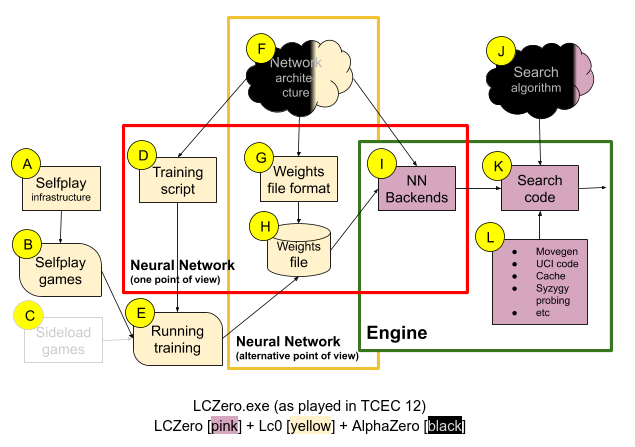
5️⃣ Leela Chess Zero
Image
  • CCRL: 3368 | CEGT: 3549

  • Inspirada en AlphaZero

  • MCTS + redes profundas

  • Requiere GPU para máximo rendimiento

📌 Juega como una entidad alienígena.


6️⃣ Houdini

  • Fortaleza defensiva legendaria

  • Estilo sólido, difícil de derrotar

  • Multi-core masivo (128 núcleos)


7️⃣ RubiChess

  • Open-source

  • Magic bitboards + NNUE

  • Muy competitivo en torneos privados


8️⃣ Slow Chess

  • Motor + GUI propia

  • Ideal para análisis humanos

  • Control directo de dificultad


9️⃣ Berserk

  • Open-source en C

  • Arquitectura NNUE propia

  • En rápido ascenso


🔟 RofChade

  • NNUE HALFKA

  • Dataset de 2.8 mil millones de posiciones

  • Excelente en Chess960


⚙️ Del puesto 11 al 32: la élite silenciosa

Motores como Ethereal, Seer, Igel, Fire, Minic, Caissa, Andscacs, Booot, Xiphos, GullChess, Hannibal, entre otros, demuestran que:

  • El ajedrez artificial es un ecosistema vivo

  • Cada año nacen arquitecturas nuevas

  • Muchas ideas luego migran a Stockfish o Leela


🤖 ¿Son los humanos todavía relevantes?

Desde Deep Blue vs Kasparov (1996) hasta hoy, la respuesta es clara:

❝ El ajedrez ya no es un duelo de mentes,
es un diálogo entre humanos y máquinas ❞

Los grandes maestros aprenden de los motores, no al revés.


🧠 AlphaZero: el mito que lo cambió todo

DeepMind creó AlphaZero:

  • 80,000 posiciones/segundo

  • Stockfish: ~70 millones/segundo

  • Resultado: AlphaZero aplastó a Stockfish (2017)

📌 No buscaba más… entendía mejor.

Inspiró proyectos como Leela Chess Zero y nuevas NNUE.


Conclusión: el trono no está vacío

En 2025, el ajedrez es:

  • Ciencia computacional

  • Teoría del caos

  • Inteligencia artificial aplicada

  • Y, para algunos, una forma de vida

Los motores ya no juegan ajedrez.
Definen qué es el ajedrez.


🔖 Tags / SEO

Tags: chess engines 2025, Stockfish, Leela Chess Zero, Komodo, NNUE, TCEC, CCRL, CEGT
Hashtags: #ChessAI #ChessEngines #Stockfish #LeelaZero #Ajedrez #InteligenciaArtificial #TCEC



Thursday, December 25, 2025

Top Chess Engine Championship (TCEC):The Unofficial World Championship of Computer Chess

 Image of Top Chess Engine Championship (TCEC)


The Unofficial World Championship of Computer Chess

In the digital age of chess, where silicon minds battle at depths no human can reach, one name stands above the rest: Top Chess Engine Championship, better known as TCEC.
Though not officially sanctioned by FIDE or ICCF, TCEC is widely regarded as the de facto world championship of chess engines—respected, feared, and closely watched by programmers, grandmasters, and researchers alike.


Origins: From a One-Man Vision to a Global Standard

The Top Chess Engine Championship began in 2010 under its original name, Thoresen Chess Engines Competition, founded and operated by Martin Thoresen. His vision was simple but radical: create a pure, uncompromised testing ground where the strongest chess engines could compete under long time controls and equal conditions.

After a brief pause in 2012, the tournament was revived in early 2013 (as nTCEC), and in 2014 it officially became TCEC, adopting its modern name and identity.

From Season 7 onward, organization and management were taken over by Chessdom, bringing professional infrastructure, sponsorship, and continuous live broadcasting.


Website & Mission

🌐 Official Website:
👉 https://tcec-chess.com

🎯 Core Goal:
To provide high-quality, long-time-control computer chess, streamed 24/7, using:

  • Identical hardware

  • Identical opening books

  • Strictly regulated conditions

The objective is not entertainment gimmicks, but truth:

Which engine is objectively strongest under fair, scientific conditions?

This philosophy is why TCEC is often called:

“The Unofficial World Computer Chess Championship.”


Why TCEC Became the Gold Standard

Image of Top Chess Engine Championship (TCEC)

Although the World Computer Chess Championship (WCCC) exists, TCEC has surpassed it in prestige due to:

  • Stronger and more diverse engine lineups

  • Longer time controls (higher-quality games)

  • High-end hardware

  • Transparent rules

  • Continuous Elo tracking

  • Public scrutiny via live broadcasts

As a result, nearly all elite engines prioritize TCEC participation.


Competition Structure: Seasons of Digital Warfare

Image

TCEC runs in Seasons, each lasting 3–4 months, played round-the-clock.

Main Tournament Formats

Each season may include:

  • League Season (multi-division system)

  • TCEC Cup (knockout format)

  • TCEC Swiss

  • Fischer Random Chess (FRC)

  • Double Fischer Random (DFRC)

  • Fischer Random Double (FRD)

  • 4k and special experimental events

  • Bonus contests like Viewer-Submitted Openings

Until Season 21, the season winner was crowned TCEC Grand Champion after a dramatic Superfinal match.


Engine Rules & Technical Integrity

TCEC is ruthless about fairness:

  • All engines run on Linux

  • Same hardware for everyone

  • Same opening books (changed each stage)

  • Pondering disabled

  • Syzygy 7-man tablebases allowed

  • Large memory pages enabled

  • Engines may update between stages

  • GPU engines supported since Season 12

Crash Policy Evolution

  • Earlier seasons: 3 crashes = disqualification

  • Since Season 20: engines may crash without being removed mid-event, but must fix issues to return in future seasons

This balance favors stability + strength, not just raw speed.


Entry Criteria: No Clones, No Mercy

There is no open signup.

Participation is by invitation, focusing on:

  • Actively developed engines

  • Multiprocessor or GPU support

  • UCI or XBoard compatibility

  • Original codebases (no clones)

Engines banned over time include:

  • DeusX (Leela clone)

  • Houdini, Fire, Rybka, Critter (plagiarism allegations)

This strict policy protects the integrity of results.


Who Dominates TCEC?

While many engines have risen and fallen, modern dominance revolves around two titans:

  • Stockfish

  • Leela Chess Zero

Their rivalry—classical brute force vs neural learning—defines the current era of engine chess and has pushed chess theory into entirely new dimensions.


Not Official… But Practically Supreme

TCEC holds no formal FIDE crown.
Yet in practice:

  • Grandmasters study TCEC games

  • Engine developers benchmark against it

  • Elo lists reference it

  • Opening theory evolves from it

In the digital chess world, TCEC doesn’t need official status.

It earned legitimacy through:

  • consistency

  • transparency

  • quality

  • and time


Final Thoughts

TCEC is more than a website.
It is a laboratory of truth, a coliseum of algorithms, and the closest thing we have to an objective judge of chess perfection.

In a world where human championships depend on nerves, politics, and psychology—
TCEC answers only to the board.

And the board does not lie. ♟️

Wednesday, December 24, 2025

TCEC: El Campeonato Supremo de los Motores de Ajedrez y la Evolución de la Inteligencia Artificial


TCEC


Image


Introducción

El Top Chess Engine Championship (TCEC) es el torneo más prestigioso del mundo dedicado exclusivamente a motores de ajedrez. Más que una simple competencia, TCEC es un laboratorio vivo donde se observa la evolución de la inteligencia artificial aplicada al ajedrez, con partidas de altísima calidad y controles de tiempo largos que priorizan la profundidad estratégica.


¿Qué es el TCEC?

TCEC es un campeonato de ajedrez entre computadoras organizado por Chessdom, en cooperación con Chessdom Arena. Su objetivo principal es ofrecer transmisiones en vivo de ajedrez de máxima calidad, jugado estrictamente entre motores creados por distintos programadores.

Características clave del TCEC:

  • Partidas con controles de tiempo largos

  • Competencia 100% entre motores

  • Temporadas divididas en múltiples etapas

  • Duración aproximada de 3 a 4 meses por temporada

  • Un solo campeón absoluto: el TCEC Grand Champion


¿Por qué el TCEC es tan importante para el ajedrez moderno?

Image

Mucho del ajedrez que hoy vemos en torneos de élite humanos fue explorado primero por los motores del TCEC. Aperturas, sacrificios posicionales, maniobras defensivas y evaluaciones dinámicas nacieron en estas partidas antes de llegar a la teoría clásica.

El TCEC permite observar:

  • Cómo piensan las IA tradicionales (búsqueda alfa-beta)

  • Cómo juegan las IA neuronales (aprendizaje profundo)

  • Qué estilos sobreviven en condiciones puras, sin intervención humana


Campeones históricos del TCEC

Image

A lo largo de sus temporadas, el TCEC ha visto dominar a distintos motores que marcaron eras completas en el ajedrez computacional.

Lista de campeones por temporada

  • Season 17: LCZero

  • Season 16: Stockfish

  • Season 15: LCZero

  • Season 14: Stockfish

  • Season 13: Stockfish

  • Season 12: Stockfish

  • Season 11: Stockfish

  • Season 10: Houdini

  • Season 9: Stockfish

  • Season 8: Komodo

  • Season 7: Komodo

  • Season 6: Stockfish

  • Season 5: Komodo

  • Season 4: Houdini

  • Season 3: N/A

  • Season 2: Houdini

  • Season 1: Houdini


Stockfish vs LCZero: la gran rivalidad

Image

La historia reciente del TCEC está marcada por una batalla filosófica:

  • Stockfish representa la optimización extrema, la fuerza bruta controlada y la consistencia absoluta.

  • LCZero (Leela Chess Zero) encarna la revolución del aprendizaje profundo, con un estilo más dinámico, creativo y cercano al ajedrez humano.

Esta rivalidad no es solo deportiva: refleja dos caminos distintos en el desarrollo de la inteligencia artificial.


Más que ajedrez: un experimento de inteligencia artificial

Aunque el tablero sea de 64 casillas, el TCEC va más allá del ajedrez. Es un entorno donde se estudia:

  • La toma de decisiones sin conciencia

  • La emergencia de patrones complejos

  • La creatividad artificial

  • La evolución de sistemas inteligentes

Por eso, el TCEC interesa no solo a ajedrecistas, sino también a investigadores, programadores y entusiastas de la IA.


Conclusión

El TCEC es el punto más alto del ajedrez de máquinas. Cada temporada redefine lo que entendemos por juego perfecto y demuestra que la inteligencia artificial no solo calcula, sino que crea nuevas ideas ajedrecísticas.

Mientras los humanos observamos, los motores continúan escribiendo la historia del ajedrez… jugada por máquinas, pero estudiada por todos.


Etiquetas (tags)

TCEC, chess engines, Stockfish, LCZero, Komodo, Houdini, computer chess, inteligencia artificial, ajedrez computacional, torneos de motores


Hashtags

#TCEC
#ChessEngines
#Stockfish
#LCZero
#ComputerChess
#ArtificialIntelligence
#Ajedrez
#IA


Sunday, January 19, 2025

Descripción general del Campeonato de los mejores motores de ajedrez (TCEC)


 El Top Chess Engine Championship (TCEC) es una de las competiciones más prestigiosas y antiguas para evaluar los mejores motores de ajedrez del mundo. Fundado en 2010, el TCEC organiza torneos estacionales en los que los motores de ajedrez más fuertes compiten en varios formatos de control de tiempo. Los motores se clasifican en función de su rendimiento y el torneo suele dividirse en etapas que culminan en una superfinal.

Campeonato de los mejores motores de ajedrez (TCEC)


El TCEC ha ganado una importante tracción debido a su naturaleza altamente competitiva, la participación de los motores de ajedrez más poderosos del mundo y el análisis detallado que proporciona. Su estructura de torneo generalmente involucra varias ligas , progresando a través de etapas eliminatorias para determinar los motores más fuertes del mundo. La competencia opera en diferentes modalidades, incluidos los formatos clásico (controles de tiempo más largos), rápido y blitz.

Estructura y modalidades del TCEC

  1. Superfinal : Los dos mejores motores de la primera división compiten en un formato de partido largo con múltiples juegos.
  2. División Premier : esta división alberga a los motores mejor calificados en un formato de todos contra todos.
  3. Ligas : los motores compiten en varias divisiones (de 1 a 4), y los mejores motores avanzan a divisiones superiores.
  4. Copa TCEC : un torneo independiente de tipo eliminatorio con controles de tiempo más rápidos.
  5. Torneos suizos : Algunas temporadas también incluyen competiciones del sistema suizo.

Cada modalidad prueba la fortaleza de los motores bajo diferentes presiones de tiempo y condiciones, lo que permite a los desarrolladores ajustar sus algoritmos en una variedad de escenarios.

Últimos resultados de la temporada 26 de TCEC (mayo-junio de 2024)

Estos son los 10 mejores motores de ajedrez según sus actuaciones más recientes en la temporada 26 de TCEC :


1. Stockfish (desarrollo 20240513)

  • Colocación: 1º
  • Modalidad: Clásica (Superfinal, Primera División, Copa TCEC)
  • Resultados: Stockfish continuó su reinado como campeón indiscutible, ganando la Superfinal de la Temporada 26 con 31 victorias, 52 empates y solo 17 derrotas.
  • Detalles: Stockfish sigue siendo inigualable debido a su profundidad de cálculo superior y evaluaciones dinámicas Wikipedia ) .

2. Lc0 (Leela Chess Zero) 0,31

  • Colocación: 2do
  • Modalidad: Clásica, Rápida
  • Resultados: Lc0 fue subcampeón en la Superfinal, con un récord de 17 derrotas, 52 empates y 31 victorias contra Stockfish.
  • Detalles: Lc0, un motor basado en redes neuronales, continúa representando un gran desafío para Stockfish​ ( Wikipedia ) .

3. Dragón de Komodo 3.3

  • Colocación: 3º
  • Modalidad: Clásica, Copa TCEC
  • Resultados: Komodo Dragon obtuvo el tercer puesto tanto en la Premier Division como en la TCEC Cup. Es conocido por su sólido juego posicional y sus capacidades de ajuste avanzadas .

4. Berserk 13

  • Posición: 4º (División Premier)
  • Modalidad: Clásica, Blitz
  • Resultados: Berserk mostró un desempeño impresionante en la Premier Division, terminando en el nivel superior, pero no logró llegar a la Superfinal.
  • Detalles: Berserk es un motor relativamente nuevo que está ganando terreno rápidamente y se sabe que supera a los motores más antiguos en formatos blitz Open Chess ) ( Open Chess ) .

5. Sugar AI SE

  • Posición: 1º (Copa TCEC)
  • Modalidad: Blitz, Rápido
  • Resultados: SugaR AI se llevó el título de la Copa TCEC con una sólida actuación en partidas rápidas y blitz, superando incluso a Stockfish y Lc0 en controles de tiempo más cortos Open Chess ) .

6. CorChess20240422

  • Posición: 2º (Copa TCEC)
  • Modalidad: Blitz, Clásica
  • Resultados: CorChess terminó segundo en la Copa TCEC y mantuvo una posición de primer nivel en los formatos rápido y clásico Open Chess ) .

7. Ajedrez Shash 34.6

  • Ubicación: 3.º (División Premier de TCEC)
  • Modalidad: Clásica, Blitz
  • Resultados: ShashChess estuvo entre los 3 mejores motores de la Premier Division, teniendo un desempeño particularmente bueno en torneos rápidos y blitz Open Chess ) .

8. Dragón 3.3

  • Posición: 2º (Torneo suizo TCEC)
  • Modalidad: Sistema Suizo, Blitz
  • Resultados: Dragon tuvo un buen desempeño en el Torneo Suizo, pero no pudo superar a Stockfish o Lc0 en formatos más largos​ ( Wikipedia ) ​( Open Chess ) .

9. Obsidiana 12.0

  • Posición: 2º (Torneo de Motores de Clase Media CEDR)
  • Modalidad: Blitz, Rápido
  • Resultados: Obsidian terminó como subcampeón en un torneo de rango medio altamente competitivo Open Chess ) .

10. PlentyChess 1.0.0

  • Posición: 3.º (Torneo de clase media CEDR)
  • Modalidad: Blitz
  • Resultados: PlentyChess, un recién llegado a la escena superior, ha demostrado ser prometedor con actuaciones consistentes en torneos blitz y de motores de clase media Open Chess ) ( Open Chess ) .

Conclusión

El Top Chess Engine Championship (TCEC) sigue siendo la plataforma líder para evaluar los mejores motores de ajedrez del mundo, lo que permite que los motores demuestren su destreza en varios formatos. Stockfish sigue siendo la fuerza dominante en la IA de ajedrez, seguida de cerca por Lc0 , con Komodo Dragon y otros manteniendo una fuerte presencia competitiva. La incorporación de varias modalidades, que van desde el clásico hasta el blitz, ofrece una evaluación integral de las fortalezas y la adaptabilidad de estos motores.

Para conocer las últimas actualizaciones y resultados, puede visitar la página oficial de TCEC Wikipedia ).

Wednesday, October 9, 2024

The Art of Opening Book Tuning in Chess Engines

9 chess board with opening positions


Creating and maintaining an opening book for a chess engine is a meticulous process that requires both strategy and understanding of the game. The contributors Kevin Freyer, Mark Mason, Paulo Soares, Dagh Nielsen, Nelson Hernandez, and Sedat Canbaz, all of whom have influenced the realm of opening book development, have provided insightful guidelines that are invaluable for anyone interested in crafting a competitive opening book.

What is an Opening Book?

In chess engines, an opening book is a collection of pre-programmed moves that helps the engine efficiently navigate the early stages of the game. An engine draws from its opening book during the initial moves, leveraging well-known strategies without needing to calculate every option. The book helps the engine avoid pitfalls and saves computational power for the middle and endgames.

An essential point in crafting an opening book is to ensure compatibility between the book and the engine being used. For instance, a book optimized for Shredder may not work effectively with Fritz or Junior, emphasizing the need for engine-specific books.

Key Steps to Creating and Tuning an Opening Book

  1. Start with a Database of Games:

    • Begin by gathering high-quality databases of games played by engines. You want these to be rated games to ensure that the moves are sound. Focus on engine games rather than human games to ensure that the book remains relevant to the capabilities of modern engines.
    • Sources such as PlayChess can provide comprehensive game bases.
  2. Create an Empty Book:

    • In a chess GUI like Fritz, go to FILE/NEW/OPENINGS BOOK and create an empty book. Then, import your games by selecting EDIT/OPENINGS BOOK/IMPORT GAMES. This process will feed your opening book with the lines used in those games.
  3. Hand Tuning the Book:

    • Hand tuning is a critical step to refine the book. It involves analyzing losing lines and reinforcing winning ones through deep engine analysis. As Kevin Freyer highlights, the most valuable aspect of tuning comes from revisiting positions where the engine struggled and manually updating the book with better moves.
    • You can mark moves with a high likelihood of success as "green" (main move) and moves that led to defeats as "red" (do not play in tournaments). This method allows the engine to avoid repeating mistakes and increases the book's competitive strength over time.
  4. Specialize the Book by Engine:

    • As stated, it is crucial to tailor the book for the engine being used. For example, a book fine-tuned for Rybka may not work as well for Stockfish. If you want to use the same book across multiple engines, create separate versions for each engine and make periodic backups to ensure the integrity of your work.
  5. Book Settings and Tuning:

    • In the Fritz GUI, you can adjust the settings to control how the book behaves:
      • Variety of Play: Determines how varied the opening moves will be.
      • Influence of Learn Value: Adjusts how the engine adapts its play based on past successes or failures.
      • Learning Strength: Controls how quickly the book learns from losses.
    • According to Freyer, minimizing variety and learning strength can result in a more focused and consistent book. Still, each engine's configuration may require adjustments.
  6. Expanding the Book:

    • As you continue to play games, your book should evolve. Regularly import new games and analyze them for potential improvements. Kevin Freyer recommends playing 50-60 games at a time and then using those results to fine-tune the book.
    • Dagh Nielsen emphasizes that the book should be updated continuously. No book is static—engines will find new ways around previously strong lines, requiring you to stay vigilant.

Practical Advice from Experts

  • Focus on Time Controls: Books can be sensitive to time controls. A book optimized for blitz might not perform well in longer time formats like classical. Therefore, maintain different books for different formats.

  • Analyze Losses: When tuning, focus on the games where your engine lost, especially within the first 50 moves. Find where the evaluation turned negative and use the engine's infinite analysis mode to search for refutations.

  • Seed Book Strategy: As Dagh Nielsen describes, a "seed book" can be developed by importing games from top players or engines. This seed book serves as the foundation that you can later expand and tune by playing and adding your own games.

  • Be Original: Nelson Hernandez encourages independent thinking in book-making. Instead of solely relying on the work of others, experiment with your own ideas and strategies. This creativity can lead to breakthroughs in performance and originality.

Managing the Learning Process

  • Automatic Learning: While enabling the learning function can help avoid repeated mistakes, automatic learning can sometimes make the book too conservative, leading to more drawn games. Freyer advises manual tuning over full reliance on learning to ensure that the book evolves more dynamically.

  • Backup Often: Always back up your book before making significant changes. Chess engine play is fluid, and new lines can sometimes worsen overall performance. If a new change doesn't work, revert to a previous version and try again.

Key Openings for Engine Play

For White:

    1. e4: Offers aggressive possibilities but is risky.
    1. d4: Solid but difficult to gain an advantage if Black plays correctly.

For Black after 1. e4:

  • Sicilian Defense: A reliable response to 1. e4.
  • French Defense: Offers a solid and strategic approach.

For Black after 1. d4:

  • King's Indian Defense: A sharp, counter-attacking opening.
  • Queen's Gambit: A classical, reliable opening for Black.

Conclusion

Creating and fine-tuning an opening book for chess engines is a long-term commitment, requiring constant updates and meticulous analysis. However, with the proper techniques, you can develop a highly competitive book that will significantly improve your engine's performance. By drawing on the insights of experienced bookmakers and constantly analyzing new games, you can craft an opening book that is uniquely yours and tailored to your playstyle.

This guide draws from the collective wisdom of notable figures in the field like Kevin Freyer, Mark Mason, and Dagh Nielsen, making it a valuable resource for anyone seeking to master the art of chess book-making.

How to Create a Polyglot INI File: A Step-by-Step Guide


polyglot chess

Polyglot is a powerful adapter created by Fabien Letouzey that allows UCI chess engines to be used with non-UCI interfaces, such as the WinBoard GUI. Acting as a bridge between the chess engine and the user interface, Polyglot ensures that commands and data flow smoothly between the two.

Here is a basic guide to creating a Polyglot INI file, which is necessary for configuring Polyglot to work with a UCI chess engine. This guide uses the Delfi chess engine as an example, but the process can be adapted for any UCI-compatible engine.

Understanding the Polyglot INI File Structure

The Polyglot INI file has two required sections:

  1. [Polyglot] Section: This section contains configuration options for Polyglot itself, such as the path to the engine executable and other related settings.

  2. [Engine] Section: This section contains options specific to the UCI engine, such as hash size and other UCI parameters.

These two sections must always be present in every Polyglot INI file.

Steps to Create a Polyglot INI File

  1. Download and Install the Chess Engine:

    • For this guide, we’ll use the Delfi engine, which can be downloaded from its official page. Extract the zip file and place the engine in a folder, such as C:\Polyglot\Engine\Delfi.
  2. Open a Text Editor:

    • Use any text editor, such as Notepad, to create the INI file.
  3. Create the [Polyglot] Section:

    • In the text editor, start by adding the [Polyglot] section. The options in this section specify how Polyglot will handle communication between the engine and the GUI.

    Example:

    ini
    [Polyglot] EngineDir = C:\Polyglot\Engine\Delfi EngineCommand = delfi_uci.exe Book = false Log = true Resign = true ResignScore = 600

    Here’s what the options mean:

    • EngineDir: The directory where the chess engine is located.
    • EngineCommand: The executable file of the engine.
    • Book: Set this to false if you don’t want to use a Polyglot opening book.
    • Log: Whether or not Polyglot should log events (helpful for debugging).
    • Resign: Whether Polyglot should resign if the engine deems the position lost.
    • ResignScore: The threshold score (in centipawns) at which Polyglot will resign.
  4. Create the [Engine] Section:

    • After setting up the Polyglot section, add the [Engine] section. The options in this section are specific to the UCI engine you are using. You can find these options by running the engine and typing "uci" in its console.

    Example:

    ini
    [Engine] Hash = 128 NalimovPath = C:\Polyglot\EGTB NalimovCache = 32 OwnBook = true UCI_LimitStrength = false UCI_Elo = 2400

    Here’s what these options mean:

    • Hash: Sets the size of the hash table in MB. A larger hash size allows the engine to remember more positions and can improve performance.
    • NalimovPath: The directory path to the endgame tablebases, if available.
    • NalimovCache: Cache size for tablebases, in MB.
    • OwnBook: If the engine has its own opening book, this enables it.
    • UCI_LimitStrength: Allows you to limit the engine’s playing strength (useful if you want to play against a lower-rated opponent).
    • UCI_Elo: Sets the engine’s playing strength, measured in Elo rating.
  5. Test and Fine-Tune the INI File:

    • Once you’ve created the basic INI file, you can test it by launching Polyglot. If the settings need adjustment, you can modify the INI file by adding or removing options.

    Here’s a complete example of what your INI file might look like for the Delfi chess engine:

    ini
    [Polyglot] EngineDir = C:\Polyglot\Engine\Delfi EngineCommand = delfi_uci.exe Book = false Log = true Resign = true ResignScore = 600 [Engine] Hash = 128 NalimovPath = C:\Polyglot\EGTB NalimovCache = 32 OwnBook = true UCI_LimitStrength = false UCI_Elo = 2400
  6. Save the INI File:

    • When you’re satisfied with the configuration, save the file as polyglot.ini in the same directory as polyglot.exe.

Alternative Method: Polyglot_GUI Utility

If manually creating an INI file feels tedious, you can use a utility like Polyglot_GUI developed by Alex Guerrero. This tool simplifies the process of creating and configuring Polyglot INI files through a graphical interface.

Final Notes

  • Book Management: If you want to use a Polyglot opening book, set Book = true and specify the path to the book file using the BookFile option.

  • Logging: Enable logging by setting Log = true to help diagnose any issues that arise during the game.

  • Fine-Tuning: Each engine has different options. It’s important to check the engine’s UCI options by typing "uci" into the engine’s console and adjusting the INI file accordingly.

With this guide, you should now be able to create a functional Polyglot INI file, allowing you to connect UCI engines to WinBoard or other non-UCI chess interfaces.


References:

ICS Commands: A Quick Start and Command Overview

 YaY Ultimate Edition: A Quick Start and Command Overview

chess


YaY Ultimate Edition is a powerful tool designed to enhance the experience of online chess, particularly for those who use Yahoo! Chess or similar platforms. It offers a robust set of commands for managing games, tables, and interactions, along with automation features for smoother gameplay. This post provides a quick start guide and detailed list of commands to help you get the most out of YaY Ultimate Edition.

Quick Start Guide

Joining a Table
To join an existing table, for example, table 16, simply type:

obs 16

Leaving a Table
To leave the table (must stand first if seated):

unobs 16

Creating a New Table
To create your own table:

lua
create

To create a table with a custom name, such as "autochess table":

lua
create autochess table

Sitting and Standing Commands
To sit as white:

sit w

To sit as black:

css
sit b

To stand up from your seat:

stand

Starting and Resigning a Game
To start a game manually:

sql
start

To resign from a game:

resign

Setting a Timer
To set the timer on a table (e.g., 10 minutes):

css
tset time 10

To add an increment to the time (e.g., add 5 seconds per move):

tset inc 5

Detailed Command List

Observing a Table
You can observe any table by using the following command. For example, to observe table 69:

observe 69

Alternatively, the play command will observe and attempt to seat you in the first available seat. For example, to join table 69 as white:

play 69 w

Leaving a Table
If you are not seated and want to leave the table, use:

unobserve

Creating a Table with Timer and Description
Create a table with a timer and increment:

bash
create timer/increment

For example, to create a table with a 10-minute timer and 0 seconds increment:

lua
create 10/0

To add a custom description for an all-star table:

sql
create 2/3 Programs Only

Auto Boot and Rating Formula
YaY has an autoboot feature for players who don't meet your rating requirements. To set the rating differential (e.g., 500 points):

formula 500

To play against everyone, regardless of rating:

yaml
formula 3400

To toggle autoboot on or off:

arduino
set formula

Canceling a Game
If you or your opponent wish to cancel a game:

cancel

To accept a cancel request:

acancel

Setting Auto Messages
YaY can send automatic messages such as warnings or “Good Game” messages. To toggle this feature:

arduino
set warning

Table Protection
To make a table public:

protect 0

To make it private:

protect 2

Inviting Players and Booting
To invite a player to your table:

css
invite [username]

To boot a player, for example, zozur:

boot zozur

You can also boot all players:

css
boot all

Auto-Resign and Boot No Start
YaY has an auto-resign feature if a player hasn't made a move within 15-20 seconds. To toggle this:

arduino
set autoresign

If an opponent doesn't start the game within a set time, YaY will boot them. To toggle this feature:

arduino
set bootnostart

To change the boot delay (e.g., 45 seconds):

bootnostartdelay 45

Advanced Commands

  • Finger: Shows information about a specific player:

    css
    finger [username]
  • Games: Displays all active games on the server:

    games
  • Kibitz: Sends a message to your table:

    css
    kibitz [message]
  • Shout: Sends a message to the entire lobby:

    css
    shout [message]
  • Moves: Shows the moves of your current game:

    moves
  • Exit: Gracefully terminates your connection:

    bash
    exit

Configuring YaY

YaY is customizable. You can adjust default settings such as autostart, autoboot, and auto messages by editing the YaY.cfg file. Make sure to use a text editor like Notepad to make changes, but avoid renaming the file to prevent issues.


YaY Ultimate Edition provides a wide range of commands to make online chess management smoother and more automated. Whether you're hosting games, managing players, or just looking for a more efficient way to run your chess experience, these commands offer the flexibility you need

---------------------------------------------------------------------------------------------------------------- ----------------------------------------------------------------------------------------------------------------- ----------------------------------------------------------------------------------------------------------